



A hard credit check can lower your credit score temporarily. A soft credit check does not affect your score at all.
- Who sees each type: Soft searches are visible only to you on your credit report. Hard searches are visible to you and to lenders who access your file.
- How long they stay on file: Both types can remain on your report for up to two years. Most scoring models only count hard enquiries for the most recent 12 months.
The practical next step: check your credit file now, and use a soft eligibility check before any formal application. That way you see your likely options without any score impact.
Key takeaways
A hard credit check affects your score temporarily and stays visible to lenders for up to two years; a soft check leaves no scoring mark and is only visible to you.
| Point | Details |
|---|---|
| Hard checks affect your score | A hard search causes a small, temporary score drop and remains on file for up to two years. |
| Scoring models use 12 months | Most scoring models only count hard enquiries from the most recent 12 months, not the full two years. |
| Soft checks leave no mark | Soft searches do not affect your score and are visible only to you, not to lenders. |
| Use soft checks before applying | Run a soft eligibility check first to see likely offers without triggering any score impact. |
| Loanable uses soft eligibility checks | Loanable’s CeMAP-qualified advisors assess secured loan eligibility via soft search, so your score is protected during the research stage. |
Table of Contents
- What is a credit check in the UK?
- What is a soft credit check and when does it happen?
- What is a hard credit check and when does it happen?
- How do soft and hard credit checks differ?
- What information appears in each type of search?
- Who performs soft and hard checks in the UK?
- How long do searches stay on your file and how do they affect your score?
- How to avoid or reduce the impact of hard credit checks
- How brokers and lenders use soft eligibility checks
- Can you get a hard search removed from your credit file?
- How to view the searches on your credit report
- Check your eligibility for a secured loan without affecting your score
- Sources
What is a credit check in the UK?
A credit check, also called a credit search, is when an organisation looks at your credit file to assess your financial history. Lenders run them before deciding whether to offer you credit. Landlords, employers, and insurers may run them too, for different reasons.
Three credit reference agencies (CRAs) hold credit data on UK consumers:
- Experian — the UK’s largest CRA, providing consumer reports and scores used by many high-street lenders.
- Equifax — holds its own version of your file and is used by a wide range of UK banks and credit card providers.
- TransUnion — the third major UK bureau, whose data feeds into products such as Credit Karma.
Each agency holds slightly different data depending on which lenders report to them, so your file may vary across the three. Your credit report is the full record of your accounts, payment history, public records, and search history. Your credit score is a number calculated from that report. The score itself is not universal; each agency uses its own scale and methodology.
Experian’s UK consumer guidance explains how searches appear on your report and what lenders can see when they access your file.
What is a soft credit check and when does it happen?
A soft credit check, or soft search, is an informational review of your credit file. It is not tied to a formal credit application, and it does not affect your credit score.
Common examples of soft searches include:
- Self-checks — when you view your own credit report through Experian, Equifax, TransUnion, or a service like Credit Karma.
- Pre-qualification and eligibility checks — when a lender or broker checks your likely eligibility before you formally apply.
- Employer background checks — some employers run a soft search as part of a pre-employment screening process.
- Account reviews — existing lenders may periodically review your account using a soft search.
- Insurance quotes — many insurers run a soft search when generating a quote.
- Some buy-now-pay-later pre-checks — certain BNPL providers use soft searches at the pre-approval stage.
Soft inquiries do not affect credit scores and may remain on your report, but they are not used in any scoring calculation. Visibility is limited: soft searches are generally only visible to you when you view your own report. Some categories of soft search, such as promotional or insurance-related checks, may be visible to specific industries, but they still carry no weight in lending decisions.
What is a hard credit check and when does it happen?
A hard credit check, or hard search, is a full review of your credit file carried out by a lender with your permission as part of a formal credit application. Unlike a soft search, it is recorded on your file in a way that other lenders can see.
Typical situations that trigger a hard search in the UK include:
- Applying for a credit card or personal loan.
- Submitting a mortgage application.
- Taking out car finance through a dealership or finance provider.
- Some rental applications, where a letting agent or landlord requests a full credit check.
- Utility contracts with certain providers when setting up a new account.
You normally give consent for a hard search by signing or accepting the terms of an application. If you spot a hard enquiry on your file that you did not authorise, treat it as a potential fraud signal and investigate immediately.
Score impact: A single hard enquiry typically causes a small, temporary drop in your credit score. Multiple hard pulls in a short period can compound that effect. Hard enquiries remain on your report for up to two years, but most scoring models stop counting them after 12 months.
How do soft and hard credit checks differ?
The practical differences come down to four things: score impact, visibility, consent, and use case.
| Point | Soft search | Hard search |
|---|---|---|
| Affects credit score | No | Yes, usually a small temporary drop |
| Visible to lenders | No — only visible to you | Yes — visible to any lender who accesses your file |
| Requires your consent | Not always (e.g. employer checks, account reviews) | Yes — you must authorise the application |
| Typical use cases | Eligibility checks, self-checks, insurance quotes, employer screening | Mortgage applications, credit card applications, personal loans, car finance |
| How long on file | Can remain on file but carries no scoring weight | Up to two years; most models count only the last 12 months |
The distinction matters most when you are researching your options. At the pre-application stage, a soft eligibility check lets you see likely offers without any score consequence. Once you formally apply, the lender runs a hard search. Knowing this, you can do all your comparison shopping via soft routes and only trigger a hard search when you are ready to proceed.
What information appears in each type of search?
The depth of information returned differs between the two search types, and it varies slightly across the three UK credit reference agencies.
A typical credit file contains:
- Personal details (name, date of birth, current and previous addresses).
- Account information (credit cards, loans, mortgages, overdrafts).
- Payment history (on-time payments, missed payments, defaults).
- Public records (County Court Judgements, insolvency, electoral roll).
- A list of previous credit searches (both soft and hard).
Soft searches return limited information in many cases. A lender running a pre-qualification check may receive enough data to assess likely eligibility without seeing the full account-level detail that a formal application would reveal.
Hard searches return a fuller view of your file. The lender sees the complete picture: all open accounts, payment history, existing debt levels, and the record of recent hard enquiries. That last point matters. If a lender sees five hard searches in the past three months, they may interpret that as a sign of financial stress, even if each individual search had only a small score impact.
Agency variation is worth noting. Experian, Equifax, and TransUnion each hold their own data sets, and not every lender reports to all three. A hard search at one bureau will not automatically appear on your file at the other two.
Who performs soft and hard checks in the UK?
Understanding who runs which type of check helps you predict what will happen before you take any action.
Soft searches are typically run by:
- You, when checking your own report.
- Employers, during pre-employment screening.
- Insurers, when generating a quote.
- Brokers and lenders, when running a pre-qualification or eligibility check.
- Existing lenders, during routine account reviews.
Hard searches are typically run by:
- Banks and building societies, for mortgage and loan applications.
- Credit card issuers, when you submit a new card application.
- Car finance providers, at the point of a formal finance agreement.
- Some letting agents and landlords, when assessing a tenancy application.
Practical scenarios:
Renting: A letting agent may run a hard search as part of referencing. Ask in advance whether they use a soft or hard check. Some agents offer a soft-search referencing option.

Applying for a mortgage: The mortgage lender will run a hard search when you submit a full application. A mortgage broker, however, can often run a soft eligibility check first to identify which lenders are likely to accept you, before any hard search is triggered.
Checking eligibility for a secured loan: A broker using a soft eligibility tool can assess your likely options across multiple lenders without leaving any mark on your file. Pre-qualification processes typically use soft checks precisely to protect your score during the research phase.
Pro Tip: Before you submit any application, ask the organisation directly: “Will this trigger a soft or hard credit search?” Any reputable lender or broker should be able to answer clearly.
How long do searches stay on your file and how do they affect your score?
Hard enquiries remain visible on your credit report for up to two years. Most scoring models, however, only weight hard enquiries from the most recent 12 months when calculating your score. After that 12-month window, the enquiry is still visible but carries little or no scoring influence.
Score movement: A single hard enquiry typically causes a small, temporary drop. According to TransUnion, the effect varies by borrower profile. For someone with a strong credit history and low existing debt, the impact is usually minor. For someone with a weaker profile or high existing debt, the same enquiry can have a more pronounced effect.
Multiple hard searches in a short period compound the impact. Three credit card applications in a month, for example, may signal to lenders that you are under financial pressure, regardless of whether each application was successful.
Recovery and damage limitation:
- Keep all existing accounts current. Missed payments have a far greater score impact than a single hard enquiry.
- Avoid opening new credit accounts unnecessarily in the months before a major application such as a mortgage.
- Space out applications where possible. One application every few months is far less damaging than several in quick succession.
- Use the secured loan eligibility checklist to understand what lenders assess before you apply, so you can address any gaps first.
Soft searches do not contribute to any of this. They can remain on your file indefinitely without affecting your score or your prospects with any lender.
Borrowing Calculator
See how much you could potentially borrow against your home, subject to status.
Please enter a property value that's higher than your outstanding mortgage balance.
Based on your figures, the amount available is below our typical minimum loan of £25,000. Get in touch and we'll talk through your options.
Get my free, no-obligation quoteIllustrative only, based on a maximum combined loan-to-value of 75%. This is not a loan offer or a quote, and your actual rate, borrowing amount and monthly payment will depend on your circumstances, credit profile and the lender's criteria. Think carefully before securing other debts against your home. Your home may be repossessed if you do not keep up repayments on your mortgage or any other debt secured on it.
How to avoid or reduce the impact of hard credit checks
The most effective approach is to do your research via soft routes and only commit to a hard search when you are confident about the outcome.
- Check your credit file first. Review your report at Experian, Equifax, and TransUnion before applying for anything. Spot errors, check for unauthorised hard searches, and understand your current position.
- Use soft eligibility checks. Most brokers and many lenders offer a pre-qualification or eligibility tool that uses a soft search. Use these to narrow down your options before you formally apply.
- Group mortgage and auto rate-shopping tightly. Credit scoring models typically treat multiple mortgage or auto-loan enquiries within a short window (often 14–45 days, depending on the scoring model) as a single enquiry. This rate-shopping allowance does not apply to credit card applications.
- Limit simultaneous credit card applications. Each credit card application triggers a separate hard search with no rate-shopping protection. Apply for one at a time.
- Dispute any unauthorised enquiries. If you see a hard search you did not authorise, act on it immediately. The steps are covered in the next section.
- Improve your eligibility before applying. Reducing existing debt, correcting errors on your file, and ensuring you are on the electoral roll all strengthen your position before a hard search is triggered. The guide on how to improve secured loan eligibility covers the practical steps in detail.
Pro Tip: When using a broker, ask explicitly whether their initial assessment uses a soft search. A good broker will confirm this before accessing your file. Loanable’s eligibility check, for example, uses a soft search so your score is not affected during the assessment stage.
How brokers and lenders use soft eligibility checks
Brokers routinely use soft eligibility checks to assess a client’s likely options across multiple lenders before any formal application is made. The client’s score is not affected, and the broker can identify which lenders are most likely to approve the application and on what terms.
Pre-qualification via soft search is considered best practice for protecting consumers’ credit health before they commit to a formal application. It is particularly valuable for secured loan applicants, where the loan amounts are larger and the consequences of a declined application, with its associated hard search, are more significant.
Loanable operates this way. CeMAP-qualified advisors assess eligibility using a soft search, drawing on data from Experian, Equifax, and TransUnion to identify suitable lenders from a broad panel. The process does not affect your credit score. Loanable has facilitated over £53 million in secured loans for UK homeowners, including applicants with challenged credit histories, and focuses on secured loans, homeowner loans, and debt consolidation loans where the right lender match matters most.
Loanable is registered and verifiable through Companies House, providing an additional layer of credibility for clients who want to verify the business before engaging.
Can you get a hard search removed from your credit file?
You can dispute a hard enquiry, but only under specific circumstances. An authorised hard search, one you consented to by submitting an application, will generally remain on your file for the full two years. The dispute process is for enquiries you did not authorise.
Equifax confirms that unauthorised hard enquiries can be challenged, and that authorised ones normally remain unless fraud is proven.
- Check the creditor name on your report. Identify the organisation that ran the search and the date it was recorded. All three UK bureaus display this information in your search history.
- Contact the creditor directly. Write to or call the organisation and ask them to confirm the basis for the search. Request that they remove it if you did not authorise it. Keep a written record of all contact.
- Contact the credit reference agency. If the creditor does not resolve the matter, raise a dispute directly with Experian, Equifax, or TransUnion. Each has a formal dispute process. Provide the creditor name, date of the search, and your reason for disputing it.
- Escalate to the Financial Ombudsman Service. If the CRA does not resolve your dispute within eight weeks, you can escalate to the Financial Ombudsman Service free of charge.
- Report to Action Fraud if fraud is suspected. If you believe the unauthorised search is linked to identity theft or fraud, report it to Action Fraud (actionfraud.police.uk) and notify the CRA’s fraud team.
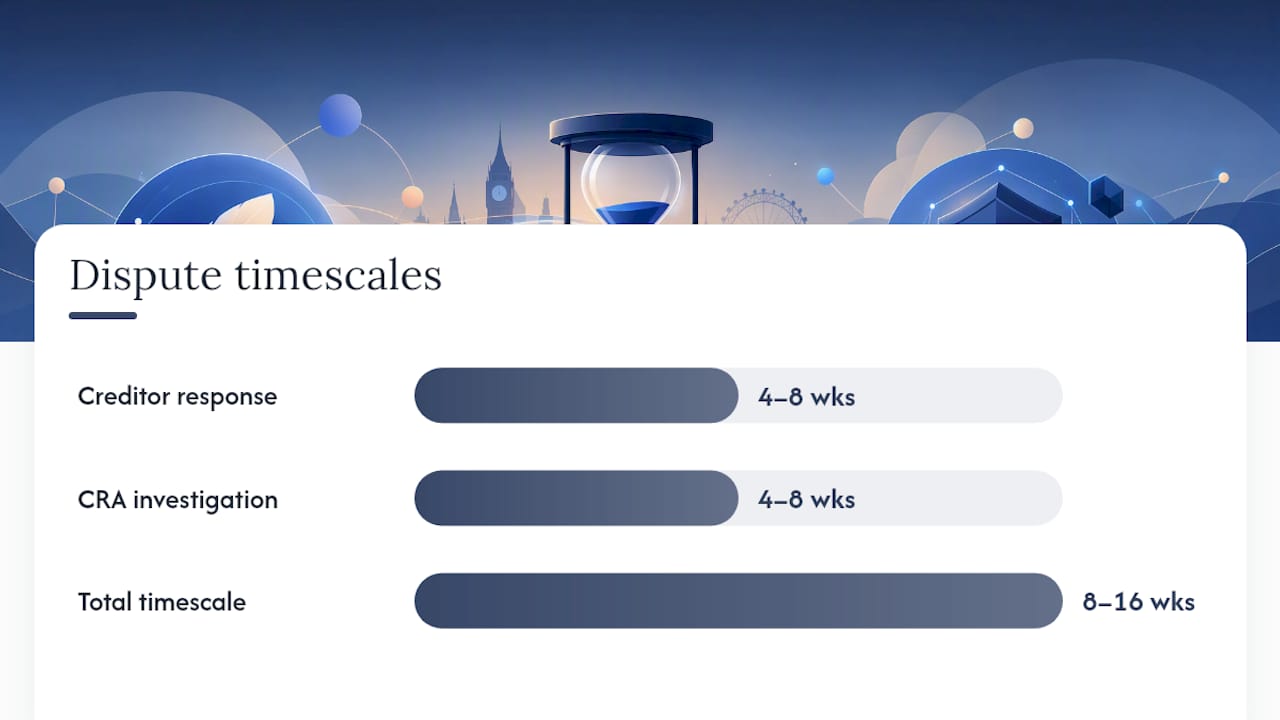
Gather evidence before you start: a copy of your credit report showing the enquiry, any correspondence with the creditor, and proof of identity. Realistic timescales are 4–8 weeks for a creditor response and a further 4–8 weeks for a CRA investigation.
How to view the searches on your credit report
Each of the three UK credit reference agencies provides a way to view your full search history, including both soft and hard enquiries.
- Experian. Sign up for a free Experian account at experian.co.uk. The free tier shows your Experian credit report and lists all searches under a dedicated “Searches” section. Searches are labelled by type and by the organisation that ran them. Experian also offers a paid CreditExpert subscription with additional monitoring features.
- Equifax. Access your Equifax report through equifax.co.uk. Equifax offers a free trial period followed by a paid subscription. Your search history appears in the “Enquiries” section of your report, with dates and creditor names.
- TransUnion. TransUnion’s consumer data is accessible via Credit Karma (free) or directly through TransUnion’s own consumer portal. Searches appear in the “Credit Enquiries” section and are labelled as soft or hard.
When reviewing your report, look specifically at:
- The date of each search.
- The name of the organisation that ran it.
- Whether it is labelled as a soft or hard search.
- Any searches you do not recognise, which should be investigated promptly.
Free access is available at all three bureaus. Paid services add real-time alerts when a new search is recorded, which is useful if you are actively monitoring for identity theft. Annotated screenshots of your search history are a practical way to track changes over time.
A note on balancing eligibility checks with score protection
The advice pattern that works in practice is straightforward: use soft eligibility checks to do all your research, then apply formally only when the numbers stack up. Clients who skip the soft-check stage and apply directly to multiple lenders in quick succession often find that the accumulated hard searches compound their difficulties, particularly when their credit profile is already stretched.
The soft-check route is not a workaround. It is how the system is designed to work. Lenders and brokers offer it because a well-matched application is better for everyone. The key is knowing to ask for it, and knowing which brokers and lenders actually use it rather than defaulting to a hard search from the outset.
Check your eligibility for a secured loan without affecting your score
Loanable offers secured loans and debt consolidation loans for UK homeowners, with an eligibility check that uses a soft search. Your credit score is not affected when you check.

CeMAP-qualified advisors assess your situation against a broad panel of lenders, including options for applicants with challenged credit histories. The process is straightforward:
- Soft eligibility check with no score impact.
- Personalised assessment from a qualified advisor.
- Access to lenders across the market, not just one provider.
- Tailored offers for debt consolidation, home improvements, and other secured borrowing needs.
Check your eligibility now to see your likely options before any formal application is made.
Sources
The following sources were used for definitions, timing rules, and scoring guidance in this article:
- Searches on your report: Soft and hard credit checks (Experian UK)
- Hard Inquiry vs. Soft Inquiry: What’s the Difference? (Ask Experian)
- Hard vs Soft Inquiries: Different credit checks | TransUnion
- Soft Inquiry vs. Hard Inquiry: Key Differences | Capital One
- Credit pulls: meaning, soft vs hard credit pulls & more | WalletHub
- Hard inquiry vs soft inquiry | Equifax (consumer education)
This article provides general information only and is not financial advice. Confirm current rules and your personal position with a qualified adviser or the relevant credit reference agency before making any credit decisions.
This article is general information, not a substitute for advice from a qualified financial advisor. Consult a qualified financial professional about your own circumstances before acting on anything here.